
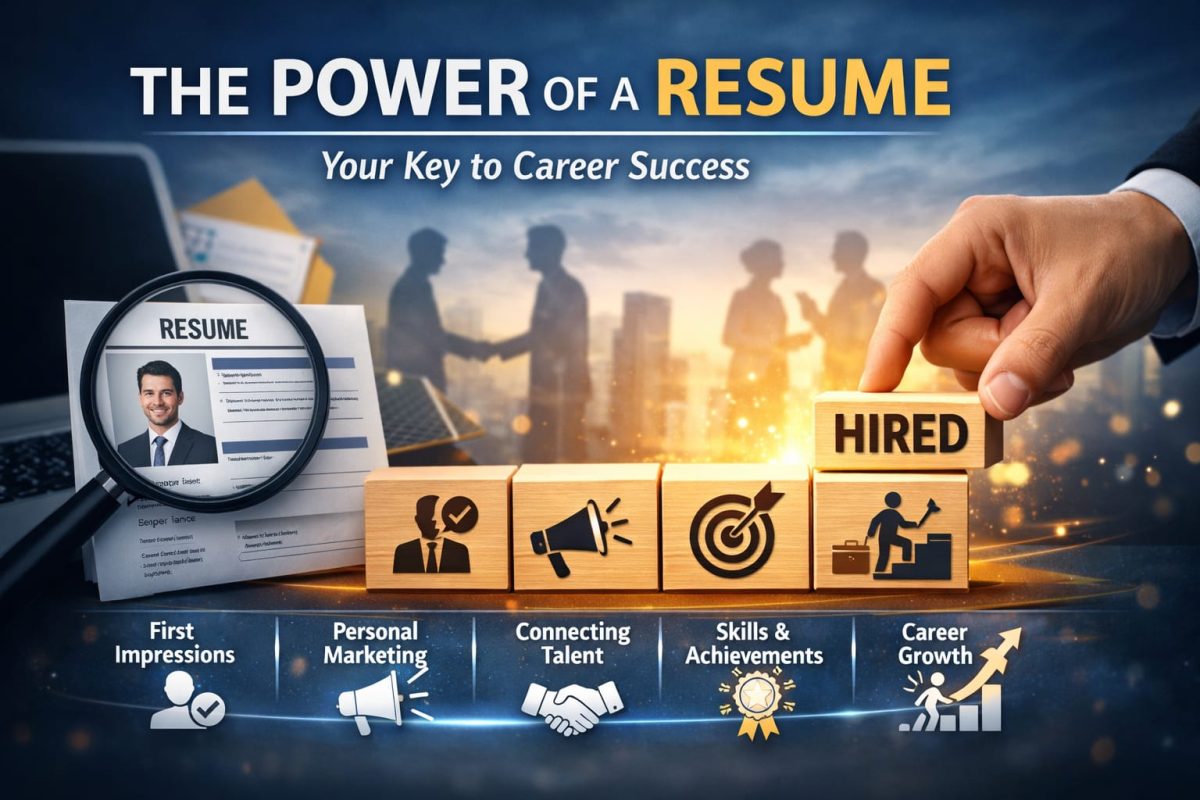
A resume is one of the most important documents in a professional career. It represents a candidate’s skills, experience, achievements, and career journey in a concise and structured format. In today’s competitive job market, recruiters and hiring managers often review hundreds of resumes for a single position. This means a resume must communicate value quickly and effectively. A strong resume not only highlights qualifications but also demonstrates how a candidate can contribute to an organization’s growth and success. For recruitment companies, resumes serve as the foundation of the hiring process, connecting talented professionals with the right opportunities.
1. Resume: Your First Professional Impression
A resume is the first interaction between a job seeker and an employer. Before a candidate gets the opportunity to speak in an interview, the resume speaks on their behalf. It presents the candidate’s qualifications, experience, achievements, and professional identity in a structured format. Recruiters often spend only a few seconds reviewing each resume, which makes clarity and impact extremely important. A well‑crafted resume immediately captures attention and creates a strong first impression that motivates recruiters to explore the candidate’s profile further.
2. A Resume is Your Personal Marketing Tool
In the modern job market, a resume works as a powerful personal marketing document. It is not just a list of jobs or educational qualifications; it is a strategic presentation of your professional value. A strong resume highlights your skills, accomplishments, and the impact you have made in previous roles. Rather than simply describing responsibilities, an effective resume demonstrates measurable results and contributions. When written strategically, a resume positions the candidate as a valuable asset who can contribute to an organization’s success.
3. Connecting Talent with Opportunity
For recruitment companies and hiring managers, resumes act as the bridge between talented professionals and organizations searching for the right skills. Recruiters depend on resumes to quickly identify candidates who match specific job requirements. A clear and well‑structured resume helps recruiters understand a candidate’s experience, strengths, and potential within seconds. When resumes effectively communicate relevant expertise, they simplify the hiring process and help connect the right talent with the right opportunity.
4. The Importance of Skills and Achievements
One of the most critical elements of a resume is the ability to showcase relevant skills and accomplishments. Employers today look for professionals who combine technical expertise with strong soft skills such as communication, leadership, problem‑solving, and adaptability. A powerful resume highlights these competencies while also presenting measurable achievements such as increased sales, improved efficiency, or successful project management. Demonstrating real impact helps candidates stand out in a competitive job market.
5. A Strategic Tool for Career Growth
A resume is more than a document used for job applications; it is a strategic tool that reflects a professional’s career development and future aspirations. As individuals gain new skills, experiences, and achievements, their resume should evolve accordingly. Regularly updating a resume ensures professionals are always prepared for new opportunities. A well‑designed resume communicates confidence, professionalism, and ambition, making it a powerful tool for long‑term career success.
Why Your Resume Matters More Than Your Marksheet
In today’s competitive job market, a well-crafted resume holds far more importance than a marksheet. When you apply for a job, the first thing any HR professional reviews is your resume—not your academic documents. Your resume serves as your first impression, highlighting your skills, experience, achievements, and overall suitability for the role.
While marksheets reflect your academic performance, they do not fully represent your practical abilities, problem-solving skills, or professional experience. Employers are increasingly looking for candidates who can contribute effectively to their organization, and this is best demonstrated through a strong resume.
A resume showcases your internships, projects, certifications, and work experience, which are often more relevant than grades alone. It tells your professional story and helps HR decide whether you should move forward in the hiring process. Only after you are shortlisted or selected do companies typically ask for supporting documents like marksheets and certificates for verification purposes. Therefore, investing time in building a powerful, clear, and impactful resume is essential.
In conclusion, your resume is your gateway to opportunities—make it strong, relevant, and professional to stand out in the job market.

